History
2025
In 2025, Daum Foundation reached beyond its existing programs by developing and implementing new initiatives, including 'PRISM:ON' (a support program for children with borderline intellectual functioning and their caregivers, run in collaboration with nonprofit startups) and the Social Welfare AI Leaders Summit and Conference.
The Foundation incubated two youth-led startups with the goal of "discovering new leaders" through its Nonprofit Startup Incubation Program, while maintaining the quality and strong participant engagement of the ChangeON Conference and D.MZ. As Dongnakga's operations came to an end after five years, the Foundation also produced and shared content documenting its achievements and expressed gratitude to the participants and supporters who had been part of its journey. Lastly, through the Human Rights Movement and Advocacy Support Program, run in partnership with the Open Society Foundations, the Foundation selected and supported 15 teams and organizations seeking to develop new projects focused on the topic of gender justice.
Nonprofit Startups
-
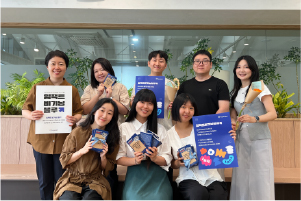 Nonprofit Startup Incubation: Impact Beginning Blue Grant Program
In 2025, Daum Foundation established the Impact Beginning Blue Grant through a major individual donation, selecting and supporting two nonprofit startups with the potential to emerge as the "next generation of nonprofit leaders." Making the most of the flexibility offered by individual funds, the Foundation provided tailored support in terms of funding amount, duration, and education and consulting. The incubation strategy was also designed with a long-term roadmap in mind, helping the teams create impact and grow sustainably.
Meet the Grantees: Younan.movement
Younan.movement works to cultivate "good adults" and enhance democratic awareness in the everyday lives of young people through online content, small-scale offline gatherings, conferences, and other activities. During the incubation process, the team plans to pivot toward projects focused on discovering, cultivating, and connecting "good adults" at the local level, as well as mapping young figures and projects related to democracy across Asia.
Meet the Grantees: Hearcycle
Hearcycle works to ensure the "right to hear" for people who are deaf or hard of hearing is realized by providing assistive listening devices and improving listening environments. Its activities include donating and lending unused assistive listening devices, collecting data for audio accessibility, monitoring the improvement of assistive listening systems, and running advocacy campaigns for the right to hear.
-
 Impact Capacity Assessment for Nonprofit Startups (ICAN)
ICAN has been actively incorporated into the nonprofit startup incubation process to systematically support and manage the growth of teams based on pre- and post-assessment results. An online service has also been made available, enabling any nonprofit startup to assess its own impact.
-
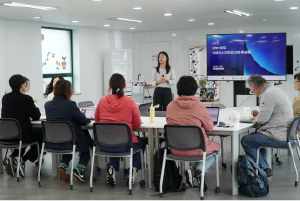 2025 Education and Consulting Support for Nonprofit Startup Development in Gyeongbuk-Cheongdo
In partnership with the Cheongdo Innovation Center, the Foundation provided education and consulting to support the development of nonprofit startups in the Gyeongsangbuk-do region, including Cheongdo. Through this initiative, the Foundation was able to identify local demand for nonprofit startups, as well as the need for support at the early stages of the incubation process of said startups.
Nonprofit Startup Partnerships
-
 Amorepacific Youth Beauty Awareness Campaign, “MEET YOUR BEAUTY”
"MEET YOUR BEAUTY" is a youth beauty awareness campaign led by Amorepacific and Daum Foundation, with support from the Community Chest of Korea. The campaign provides beauty awareness education and promotes content to help teenagers discover their own sense of beauty beyond uniform standards of beauty. The campaign partners with two nonprofit startups: Project Planet, which creates learning environments led by children and youth through project-based education, and Youth Voice, which supports young people in embracing and expressing their authentic selves.
-
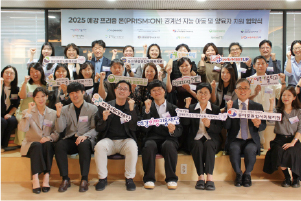 Yegang Foundation Support Program for Children with Borderline Intellectual Functioning and Their Caregivers, “PRISM:ON”
‘PRISM:ON,’ an initiative run by Yegang Foundation and Daum Foundation, sheds light on underserved communities that are often overlooked by the welfare system and the general society. In 2025, it developed a tailored, integrated support program to promote the physical, emotional, and social well-being of children with borderline intellectual functioning (BIF) and their caregivers. The program was carried out in partnership with two nonprofit startups, ‘WEMEETUP,’ which offers sports experiences that anyone can enjoy, and ‘SpringME,’ which works towards creating a world where everyone can live happier lives by building resilience, as well as eight local organizations and institutions.
-
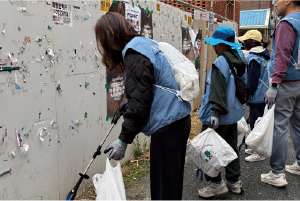 POSCO Employee Volunteer Program for Community Giving
The “POSCO Employee Volunteer Program for Community Giving” combines the capabilities of POSCO employees with the expertise of nonprofit startups to promote a culture of giving and volunteering in local communities. The program partners with nonprofit startups including Wear Again Lab (다시입다연구소), which promotes sustainable clothing consumption; Mindful Gardeners (마인드풀가드너스), which fosters ecological awareness and a sense of community through gardening activities; Lovere Paper (러블리페이퍼), which connects the lives of elderly waste paper collectors with the circular economy; and Planet Zoom.in (플래닛주민센터), which creates an accessible and enjoyable culture of volunteering by combining volunteering with travel.
Dongnakga
-
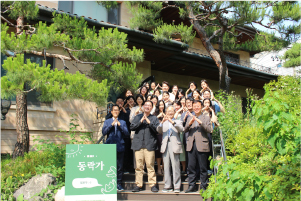 Dongnakga Farewell Project
Dongnakga was a space for nonprofit activists operated by Daum Foundation with support from the Babo Nanum Foundation. Originally a privately owned space, it was transformed through a donation into Dongnakga, a space dedicated to pursuing public good. From 2020 to June 2025, it served as an incubation space for nonprofit startups and a sustainable space for collaboration among nonprofit activists.
Dongnakga Open House and Docent Tours
Through the Dongnakga Open House, we opened the space to a wide range of organizations and members of the public and offered docent tours introducing the background of Dongnakga’s establishment, its operating philosophy, and key activities. The program provided an opportunity to share the experience accumulated through Dongnakga’s operation as a nonprofit space and the meaning of its community-based activities, while expanding awareness of its value as a platform for spaces dedicated to public interest activities.
《Dongnak Chronicles 同樂實錄》 Online Content Series
We produced and published an online content series, 《Dongnak Chronicles 同樂實錄》, documenting Dongnakga’s five years of operation. Across nine episodes, the series recorded and shared the story of the space from its beginnings through its operation, as well as the experiences and changes of those who took part, helping to share more widely the activities and meaning that Dongnakga had built over the years.
Dongnakga Farewell Party
We hosted the “Dongnakga Farewell Party,” inviting partners, contributors, and residents who had been part of Dongnakga’s journey. The gathering offered an opportunity to look back on the past five years, reflect together on the values and meaning Dongnakga had created, and share connections and gratitude among those who had been involved.
D.MZ
-
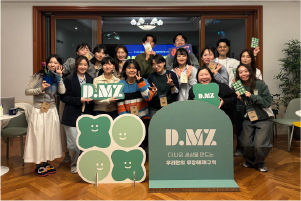 D.MZ Regular Gatherings, 7th / 8th Cohort
D.MZ is a three-session conversation gathering where social sector activists in their 20s and 30s build networks with their peers by sharing stories about work and life. Participants engaged in in-depth conversations on a range of topics related to public interest activities.
Dates: (7th Cohort) Mar. 18–Apr. 1, 2025 / (8th Cohort) May 13–May 27, 2025 / 3 sessions, 19:30–22:00
Participants: 30 social sector activists in their 20s and 30s -
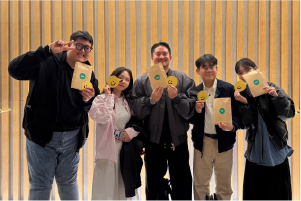 D.MZ ㄱㄱ? (D.MZ Go go?)
D.MZ ㄱㄱ? is a one-time conversation gathering where social sector activists in their 20s and 30s engage in in-depth discussions on topics of interest. Participants shared their experiences and concerns around specific groups or themes, including children and youth, culture and the arts, and more.
Dates: 4 sessions held between Mar. and May 2025
Participants: 21 social sector activists in their 20s and 30s -
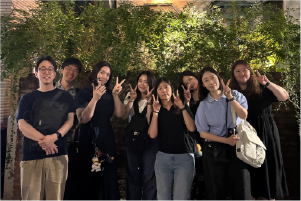 D.MZ Follow-up Gatherings
D.MZ Follow-up Gatherings are gatherings initiated and joined by previous D.MZ participants themselves. Through follow-up gatherings on a range of topics related to mental, physical, and intellectual well-being, participants continued to build and maintain their networks.
Dates: 24 sessions held between Jan. and Dec. 2025
Participants: 165 social sector activists in their 20s and 30s -
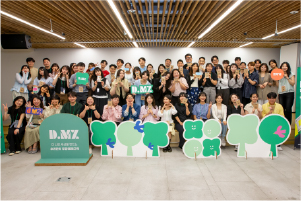 D.MZ Alumni Party
The D.MZ Alumni Party is a networking event where previous D.MZ participants come together to make new connections and support one another. Participants shared the growth and direction of D.MZ to date and expanded their networks through free networking and group discussions.
Date: Jun. 13, 2025
Participants: 56 social sector activists in their 20s and 30s
ChangeON
-
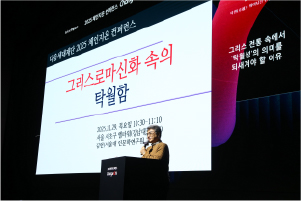 ChangeON Conference
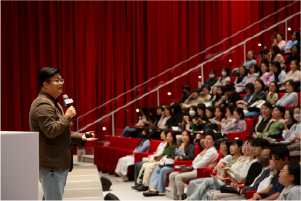
The ChangeON Conference shed new light on the power of nonprofits that have brought about change in the world through goodness and excellence. Under the theme of “Excellence — being outstanding enough to rise above,” the conference brought together nonprofit activists to build solidarity, cultivate excellence, and create meaningful social change. More than 400 nonprofit activists and stakeholders working to create a better world joined the conference, which featured talks by experts from diverse fields and presentations showcasing the experiences of nonprofit activists, receiving an enthusiastic response.
Session 1. Excellence in the Humanities and Sciences
Why We Need to Reconsider the Meaning of “Excellence” in the Greek Tradition: Kim Heon, Professor, Institute of Humanities Research, Seoul National University
Can B-Grade Science Achieve Excellence?: Lee Chang-wook, Deputy Editor-in-Chief/Reporter, Science DongaSession 2. Excellence That Changes the World
Four Stories of Changing the World with Excellence: Hong Jin-ah, Team Leader, Kakao Impact; Park Sang-won, CEO, Neulpeumgachi; Jung Min-seok, Chairperson, Ddingdong, Youth Sexual Minority Support Center; Seo Min-young, Team Leader, Korea Civil Society Organizations Network
Super-Cool: Where Does Excellence Come From?: Jang Dae-ik, Dean and Distinguished Professor, Gachon University Startup CollegeSession 3. Excellence in Support
How to Read and Create the Extraordinary in Ordinary Stories: Kim Ji-won, Reporter, Kyunghyang Shinmun
Find Your Own Way to Build Something with Care and Dedication!: Han Ji-won, Television Writer
Social Welfare AI
-
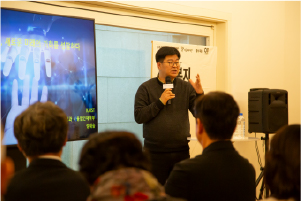 Social Welfare AI Leaders Summit
We brought together 30 social welfare leaders from across Korea for talks and a leaders’ roundtable to discuss social welfare leadership and responsibility in the age of AI, as well as ethical decision-making.
The program explored the past, present, and future of AI in a balanced and multidimensional way, in connection with the field of social welfare. It encouraged leaders in the social welfare sector to consider the fundamental questions they need to address in the age of AI, while providing an opportunity to share examples of AI use in the field and discuss the challenges ahead.
Talks
The Future Is Not Coming in the Age of AI!: Lee Sang-wook, Professor, Department of Philosophy and Department of Artificial Intelligence, Hanyang University
What Questions Is Your Organization Asking?: Kim Eun-mi, Professor, Department of Communication, Seoul National University
Tomorrow with AI, What Will We Choose?: Jung Jae-seung, Professor, Department of Brain and Cognitive Sciences, KAIST -
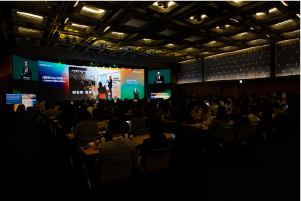 Social Welfare AI Conference
Expanding the discussions from the Leaders Summit to the practice and field of social welfare, we held a conference focused on AI and social welfare. The program featured talks exploring three perspectives on the changes AI may bring to the field of social welfare — anticipation (Green), caution (Yellow), and anxiety (Blue) — along with practical workshops designed to strengthen AI skills. The conference provided an opportunity to explore the fundamental questions of why AI is needed and how it should be used, helping social welfare practitioners proactively navigate the age of AI.
Talks
Green. The Future Forecast: The Birth of a Lightweight Civilization: Song Gil-young, Author of The Future Forecast: The Birth of a Lightweight Civilization and Mind Miner
Yellow. Threats Embedded in Artificial Intelligence and Challenges for Our Society: Lee Kwang-seok, Professor, Graduate School of IT Policy, Seoul National University of Science and Technology
Blue. Our Present Matters More Than the Future of Technology: Jo Kyung-sook, CEO, Dotori Labs, Author of AI BluePractical Workshops
Track 1. Getting Started with AI: The First Step Toward AI for Life: Yang Seok-won, CEO, Free Schole
Track 2. AI for Program Planning: Write a Strategic Program Proposal in Three Hours: Cho Sung-do, CEO, Orange Impact
Track 3. AI Content Creation: Create Content in Three Hours to Bring Nonprofit Communications to Life: Kim Myo-young, Vice
Track 4. AI Vibe Coding: Build Your Own App with Generative AI: Jung Jin-ho, CEO, J Visual School
Human Rights Movement and Activism Grant
-
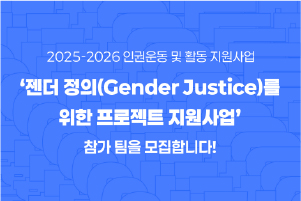 Responding to Gender Justice Agendas by Supporting 15 Early-Stage Human Rights Organizations and Teams
We selected and supported 15 early-stage human rights organizations and teams seeking to carry out creative and practical projects addressing gender-based discrimination and inequality. In particular, the program included three teams working on projects related to the Anti-Discrimination Act and one team focused on addressing gender inequality in the technology sector as special topics, enabling diverse approaches to addressing key contemporary gender issues.
Selected Teams and Organizations
Project Teams:
Organizations: -
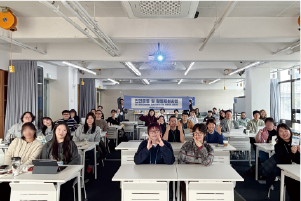 Orientation and Partnership Agreement
We held an orientation session and signed partnership agreements with the 15 selected teams and organizations. Through sessions introducing each team’s project, participants gained an overview of one another’s activities and explored opportunities for collaboration, creating a natural space for networking. We also provided guidance on the overall project schedule, partnership agreement procedures, and guidelines for grant disbursement and use, helping participating teams and organizations get their projects off to a smooth start.